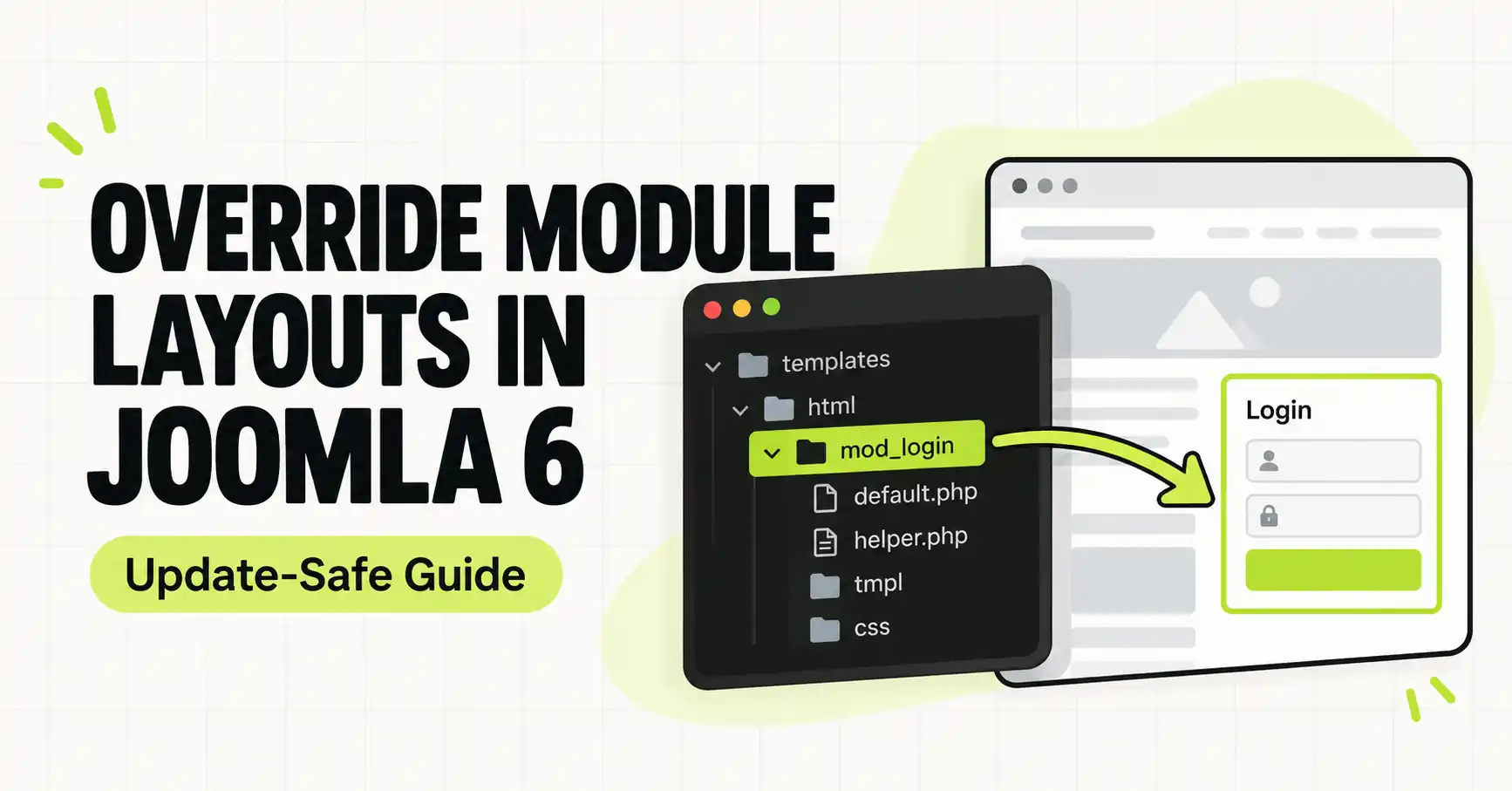
How to Override a Module Layout in Joomla 6 (Update-Safe Method)
Beginner
⏱ 5 min
Affiliate disclosure: this post may contain affiliate links (e.g., MonsterONE, Envato). If you buy through them, we may earn a commission at no extra cost to you.
⚡ Quick Answer
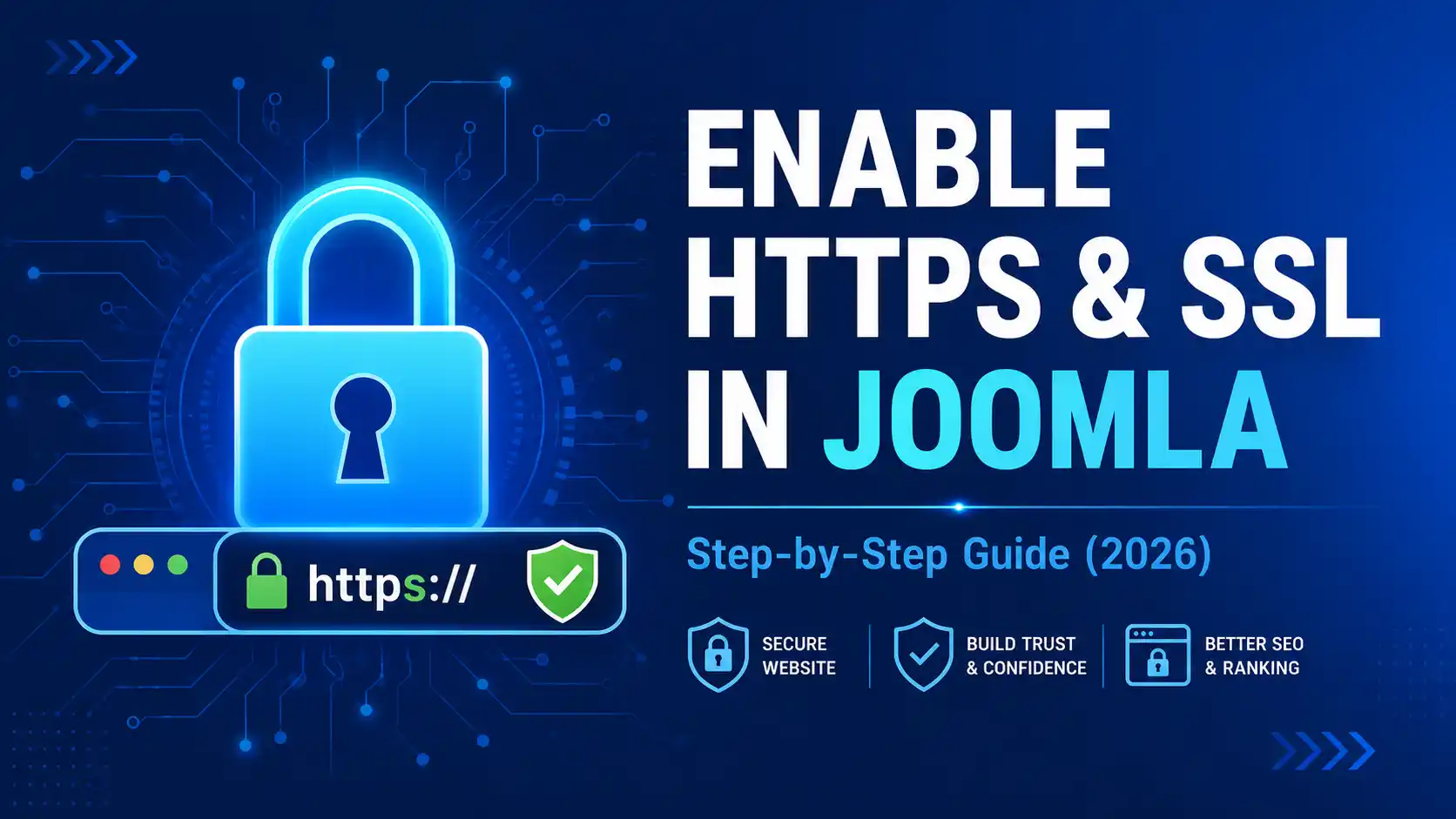
To enable HTTPS in Joomla, first install an SSL certificate at the hosting level (most hosts offer free Let's Encrypt via cPanel or Plesk). Once the certificate is active and https://yourdomain.com loads with a padlock, go to System → Global Configuration → Server in Joomla and set Force HTTPS to Entire Site, then save. Do this only after the certificate works, otherwise you can lock yourself out of the site.
This guide covers enabling HTTPS and SSL on Joomla 5.x and 6.x, the two currently supported series as of mid-2026 (verified against Joomla 5.4.7 and 6.1.2). If you're still on Joomla 3.x or 4.x, the Global Configuration steps are effectively the same, but some server-level details (PHP version, .htaccess behavior) may differ — check your host's documentation if anything doesn't match.
| Requirement | Why you need it |
|---|---|
| Admin access to your hosting control panel (cPanel, Plesk, or similar) | To issue and activate the SSL certificate |
| Joomla Super User (admin) login | To change Global Configuration settings |
| FTP/SFTP or File Manager access (optional) | Only needed if you must edit .htaccess manually |
| A domain pointed correctly to your hosting (DNS already propagated) | Certificate issuance will fail otherwise |
Before touching anything in Joomla, open https://yourdomain.com directly in a browser. If it loads with a padlock and no warning, you already have a working certificate — skip ahead to Step 4. If it fails to load, shows "Not Secure," or throws a certificate error, continue to Step 2.
💡 Note
Some hosts and CDNs (like Cloudflare) provide a certificate at their edge even if your origin server has none. In that case the padlock may already show even though your Joomla server itself isn't serving HTTPS — see Step 7 for why this matters.
Almost every host today issues free Let's Encrypt certificates directly from the control panel:
Issuance is normally instant to a few minutes. If you bought a paid certificate separately, ask your host to install it for you — this part happens outside Joomla entirely.
Reload https://yourdomain.com in a private/incognito window. You should see the padlock with no warnings. If you want a deeper check, run the domain through SSL Labs' SSL Test — it flags weak configurations, expired chains, or missing intermediate certificates before you force HTTPS site-wide.
⚠️ Don't skip this check
Turning on Force HTTPS in Joomla before the certificate actually works can make your entire site — including the admin login — unreachable. Confirm HTTPS loads cleanly first.
Once the certificate is confirmed working:
Administrator Only secures just the backend login (/administrator) while leaving the public-facing site on HTTP — useful only as a temporary halfway step, not a real fix, since visitor traffic and forms on the front end stay unencrypted.
Go to System → Global Configuration → Site tab and confirm the Site Name and any hardcoded URL fields don't reference http://. In most modern Joomla versions the "Live Site URL" field can stay blank (Joomla auto-detects the domain), but if your setup has it filled in manually, make sure it starts with https://.
After forcing HTTPS, some pages may still show a broken or "not fully secure" padlock. This is mixed content: the page itself loads over HTTPS, but it's still pulling an image, script, or stylesheet from an http:// address.
http://yourdomain.com/... links.https://, or better, use protocol-relative/relative paths where your template supports it.If your domain sits behind Cloudflare (or a similar proxy), the most common failure after this setup is an infinite redirect loop (ERR_TOO_MANY_REDIRECTS). This happens when Cloudflare's SSL/TLS mode is set to Flexible: Cloudflare talks to your visitor over HTTPS but connects to your Joomla server over plain HTTP. Your server then redirects that HTTP request back to HTTPS, Cloudflare downgrades it to HTTP again — and it loops forever.
Fix: in the Cloudflare dashboard, go to SSL/TLS and change the mode from Flexible to Full or, ideally, Full (Strict). This requires a valid certificate on your origin server (the one you installed in Step 2), so Cloudflare and your host both talk HTTPS end to end.
| Symptom | Likely cause | Fix |
|---|---|---|
| ERR_TOO_MANY_REDIRECTS site-wide | Cloudflare SSL mode set to Flexible | Switch to Full or Full (Strict) in Cloudflare |
| Some images/scripts 403 or missing only over HTTPS | Origin can't serve HTTPS but Force HTTPS is on, combined with Flexible mode | Fix origin certificate first, then set Cloudflare to Full |
| Loop happens only after login | Session cookie set with wrong scheme | Clear cookies; confirm Force HTTPS + Cloudflare mode match |
http:// and https:// — both should land on the final https:// URL.https:// property in Google Search Console and resubmit your sitemap so Google recrawls the secure URLs.No. Most hosts now issue free Let's Encrypt certificates through cPanel (AutoSSL) or Plesk ("SSL It!"). A paid certificate is only needed for specific business/compliance requirements, not for basic HTTPS.
Administrator Only encrypts just the /administrator login area. Entire Site encrypts every page visitors see. For a public website, Entire Site is the setting you want.
This almost always means a CDN/proxy like Cloudflare is set to Flexible SSL while Joomla is also forcing HTTPS. Switch Cloudflare's SSL mode to Full or Full (Strict) — see Step 7.
No — HTTPS has been a confirmed ranking signal for years, and a correctly configured 301 redirect from HTTP to HTTPS preserves existing SEO value. Just remember to update Search Console afterward.
That's mixed content — some resource on the page is still loading over http://. Open DevTools → Console to find the exact URL and update it to https:// (Step 6).
Not natively — Global Configuration only offers None, Administrator Only, or Entire Site. Per-page HTTPS rules require a third-party extension or custom .htaccess rules.
[CẦN BẠN XÁC NHẬN: thêm link tới các bài liên quan trên blog, ví dụ hướng dẫn cấu hình Cloudflare cho Joomla, hoặc bài về security hardening với Admin Tools Pro, nếu đã có sẵn]

Thanh Le is a Joomla expert and technical writer at Jlvextension.com, known for creating in-depth tutorials, extension reviews, and optimization guides. His work focuses on helping developers and webs