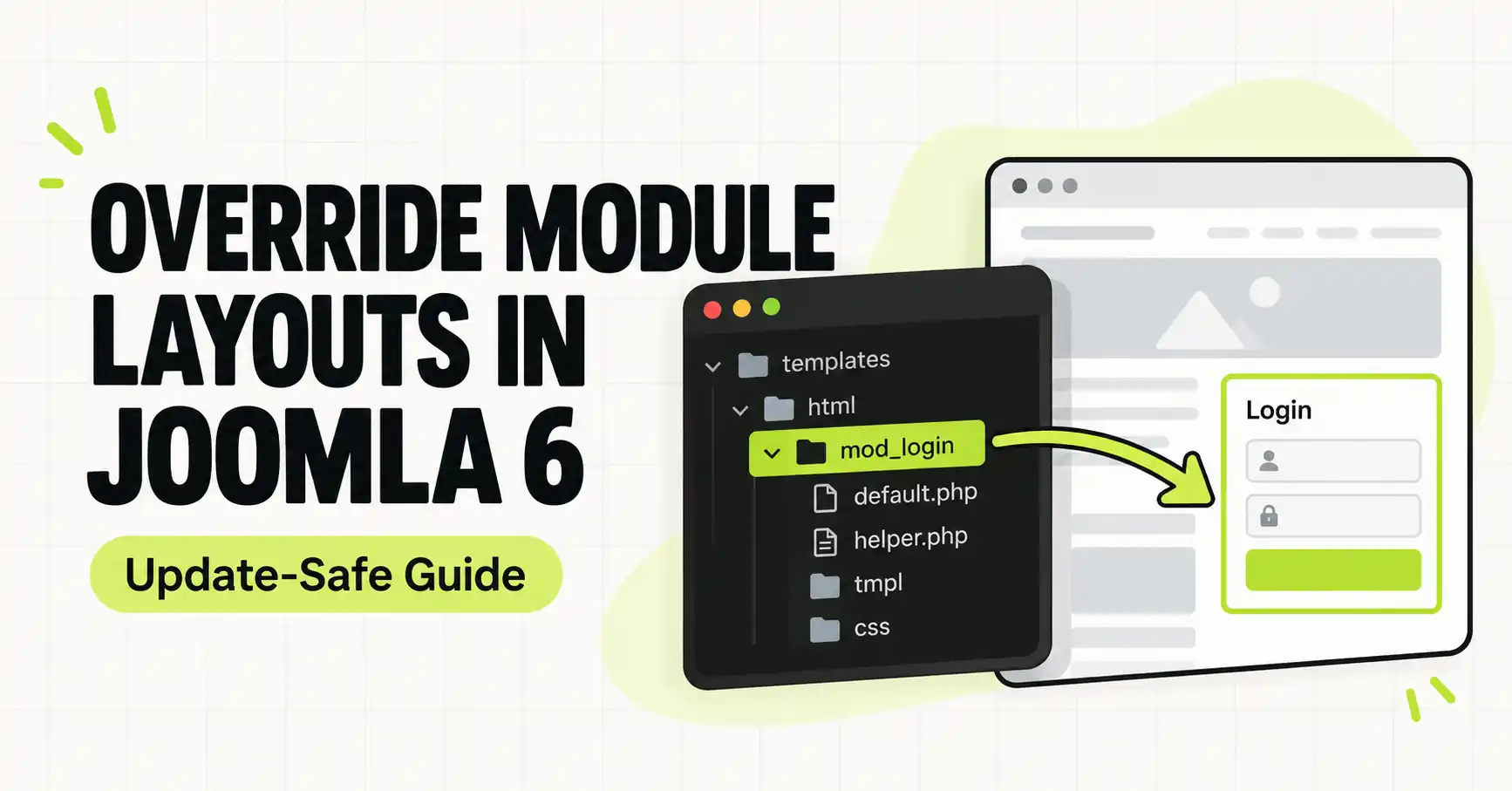
How to Override a Module Layout in Joomla 6 (Update-Safe Method)
Beginner
⏱ 5 min
⚡ Quick Answer
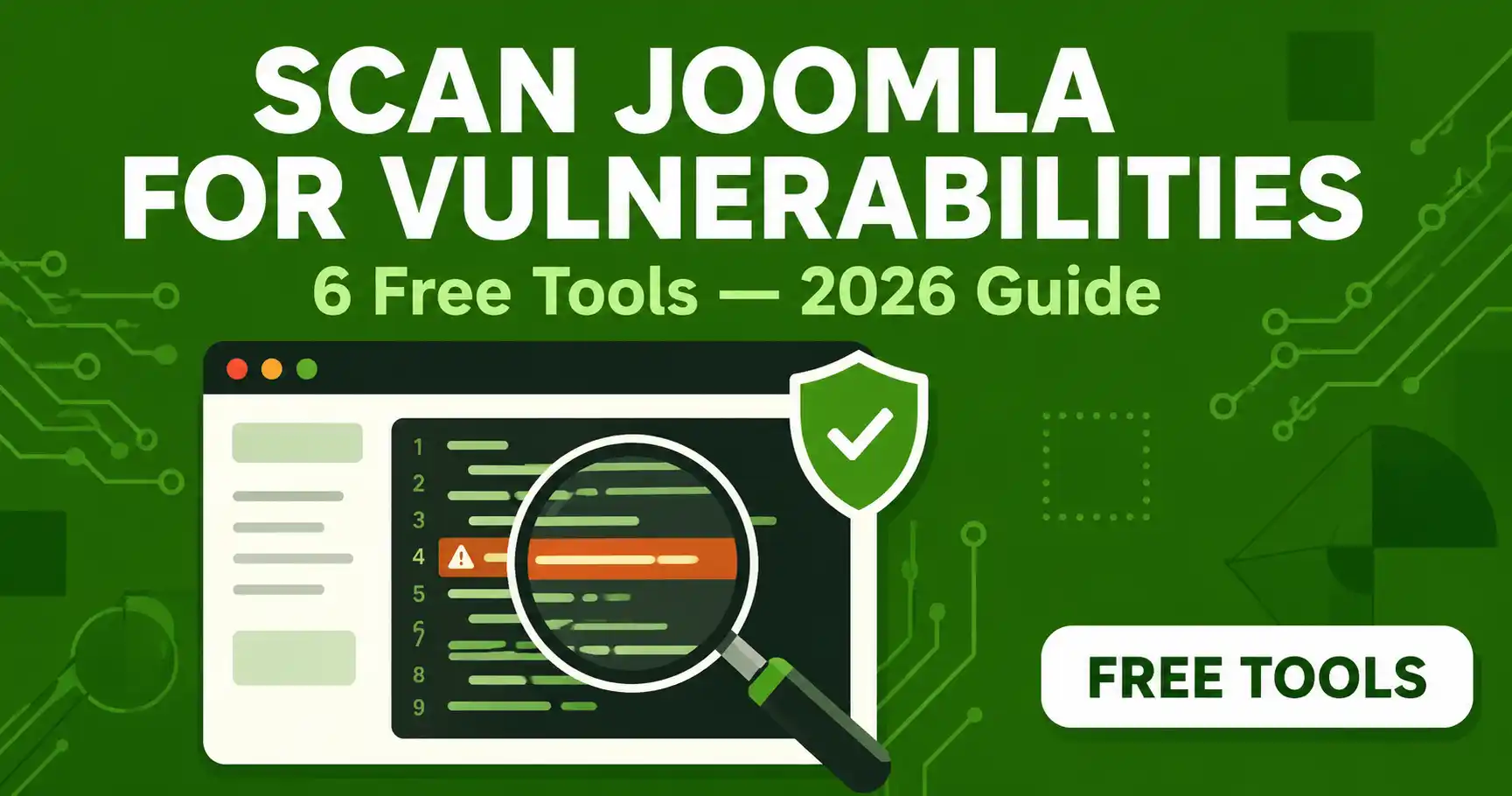
To scan Joomla for vulnerabilities without paying for an audit, combine three free automatic tools: run Sucuri SiteCheck for a remote malware/blacklist scan, cross-check your installed extensions against the official Joomla Vulnerable Extensions List (VEL), and run OWASP JoomScan for a deeper version and misconfiguration scan on sites you own. No single free tool catches everything — use at least two together.
| 📋 What you'll need | Details |
|---|---|
| Joomla admin access | To check core version and list installed extensions |
| Your site's public URL | Required for Sucuri SiteCheck and JoomScan |
| Command line (optional) | Only needed if you run OWASP JoomScan yourself instead of a hosted scanner |
| Time | 15–30 minutes for a full pass with all three tools |
This guide covers three free, automatic ways to check a Joomla site for known vulnerabilities: a no-install remote scanner, the official Joomla vulnerable-extensions database, and a command-line scanner for a deeper look. It applies to Joomla 4, 5, and 6. As of this writing, Joomla 6.1.2 and Joomla 5.4.7 are the current supported releases (security & bugfix release, July 7, 2026); Joomla 4 reached end-of-life on October 14, 2025 and no longer receives security patches.
Before scanning anything, confirm which Joomla version you're running. Log in to the administrator backend and check System → System Information, or look at the version number in the admin footer.
⚠️ Running Joomla 4 or older?
Skip straight to updating your core before running any scanner. No automatic tool can protect a site running an End-of-Life CMS version — the fix is to upgrade, not to scan harder.
Sucuri SiteCheck is a free, no-signup remote scanner built to check WordPress, Joomla, and other CMS sites for malware, blacklist status, injected code, and outdated software — all from the browser side, without needing server access.
https://yoursite.com) and start the scan.Good to know
SiteCheck only sees what a normal visitor's browser sees — it cannot inspect files on your server. It's a strong first pass, not a complete audit. A clean SiteCheck result does not mean your site has zero vulnerabilities.
Most real-world Joomla hacks come through third-party extensions, not the Joomla core. The Joomla project maintains an official Vulnerable Extensions List (VEL) at vel.joomla.org, split into two sections:
| VEL section | Meaning | Action |
|---|---|---|
| LIVE VEL | No patch available for the reported vulnerability | Uninstall the extension |
| Resolved VEL | A patched version exists | Update to the fixed version immediately |
OWASP JoomScan is a free, open-source Perl scanner (available on GitHub at github.com/OWASP/joomscan and pre-installed in Kali Linux) that enumerates the Joomla version, installed components, directory listing issues, and known core/component vulnerabilities.
⚠️ Only scan sites you own or are authorized to test
Running JoomScan — or any vulnerability scanner — against a site you don't own or don't have written permission to test can be illegal in most jurisdictions. Use it only on your own Joomla installation or a client site with explicit written authorization.
Basic usage on Linux/Kali:
git clone https://github.com/rezasp/joomscan.git
cd joomscan
perl joomscan.pl --url https://yoursite.com
JoomScan reports the detected Joomla version, whether the core is vulnerable for that version, directory listing exposure, firewall detection, and a components scan against its vulnerability database (over a thousand known component exploits at time of writing).
A one-time scan only tells you about the moment you ran it. For continuous protection, add a file-integrity monitor that flags new or modified PHP files automatically. Akeeba Admin Tools Professional for Joomla includes a PHP File Change Scanner that assigns a "threat score" to new or changed files and can run on a schedule via CRON, so you get notified if a file changes between scans — often the first sign of a compromised extension or a backdoor.
Note
The PHP File Change Scanner is part of Admin Tools' paid Professional tier; the free Admin Tools Core covers other hardening tasks (permissions, admin directory password, .htaccess protection) but not file-change scanning.
Yes. Scanning a site you own or administer is legal and considered standard security practice. Scanning a third-party site without written authorization is not — treat every scanner in this guide as "own sites only" unless you have explicit permission.
SiteCheck is a remote, browser-level scan for malware and outdated software — no install needed. JoomScan is a command-line tool that actively probes the site for version info, misconfigurations, and known component exploits, giving a deeper technical result.
Run a quick SiteCheck scan weekly and a full JoomScan + VEL check monthly, or immediately after installing a new extension. Sites handling e-commerce or user data warrant more frequent checks.
No. Automatic tools catch known, published vulnerabilities and common misconfigurations, but they miss custom code issues, business-logic flaws, and zero-days. High-value sites should still get a manual audit periodically.
Most real-world Joomla compromises come from outdated or vulnerable third-party extensions, not the core. Always check Step 3's VEL cross-reference even when the core itself is fully patched.
Once your Joomla core and extensions are patched, harden your server environment next — for example by upgrading your local PHP version for testing or comparing platform-level security trade-offs before choosing a CMS for a new project.

Thanh Le is a Joomla expert and technical writer at Jlvextension.com, known for creating in-depth tutorials, extension reviews, and optimization guides. His work focuses on helping developers and webs